
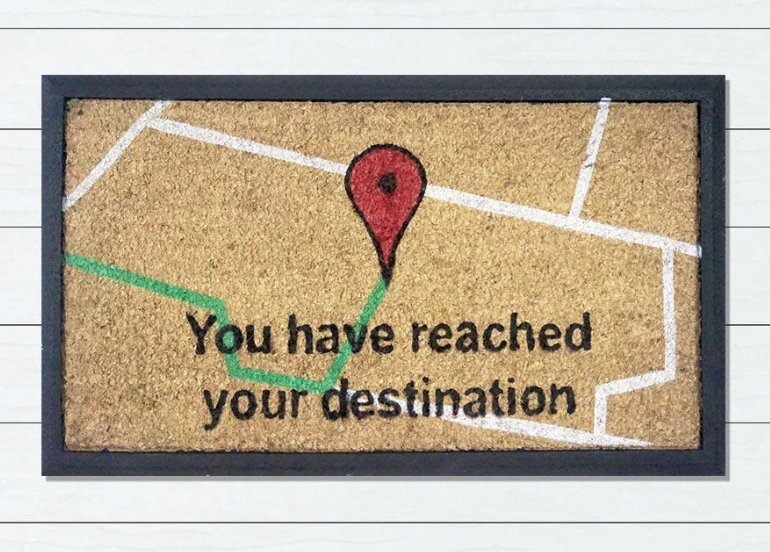
We’ve been talking quite a lot about labels lately, and the more I explore this rabbit hole of neuro-complexity, neurodivergence, autism, ADHD and all the other wonderfully different ways our brains work, the more I keep coming back to an uncomfortable truth.
Awareness is great. It’s also incredibly reductionist if we’re not careful.
Over the past 10 to 20 years, we’ve seen a huge increase in awareness, research, and conversation about neurodivergence. We’re learning more about autism, ADHD and so many other ways people experience and interact with the world. And for many of us, that’s exciting. Really exciting. There’s this wonderful enthusiasm that comes with discovering something about ourselves that we didn’t previously have the language to explain.
Suddenly, things start making sense. That explains this. That explains that. Bloody hell, that explains something I’ve been doing for the last 30 years!
And then comes the question.
What do we actually do with it?
Because awareness can become something of a trap. We become aware of something, we learn about it, and then we attach a label to it. And with that label comes a whole collection of assumptions about what somebody can do, what they can’t do, how they behave and what their future might look like.
He’s autistic, so he must be bad at socialising. She’s ADHD, so she must be disorganised. This person has a particular diagnosis, so naturally they’ll struggle with this or won’t be particularly good at that.
And all of a sudden, we’ve left very little room for maturing and growth because we’ve started expecting people to live like the label.
That’s the irony, isn’t it? We’ve spent so much time challenging a culture of conformity, a culture shaped by the Industrial Age and its expectations of what normal people are supposed to look like, only to discover that we can very easily create another kind of conformity around the very labels that were supposed to give us greater understanding.
Instead of conforming to somebody else’s idea of normal, we risk conforming to somebody else’s idea of what our diagnosis means.
What happens after the label?
I’ve often said that we live past the label. It’s an important part of how I understand neurodivergence and, more broadly, how we understand ourselves as people.
A diagnosis can be incredibly valuable. So can that earlier inkling that something might explain the way our brain works. Perhaps we’ve completed some screening questionnaires, explored self-identification, or begun recognising ourselves in the experiences of others. For some, a formal diagnosis eventually follows. For others, it doesn’t. Either way, that growing understanding can be quite extraordinary.
For some of us, it creates an enormous identity crisis. We begin recognising just how long we’ve been living in ways that don’t reflect our internal true selves. We look back over decades of experiences, decisions, relationships and professional expectations, and suddenly there’s a completely different lens through which to understand them.
For others, it’s not quite as profound. It’s more like reassembling some of the pieces, understanding a few things differently and making sense of experiences that were previously confusing.
But whatever that journey looks like, the question remains. Once we understand more about ourselves, where do we go from there?
Because I don’t want us to simply become better at describing our difficulties. I want us to discover what it means to flourish.
And that’s a rather different conversation.
Awareness doesn’t automatically create growth
We can work towards more inclusive workplaces, more naturally inclusive communities and cultures that make room for different ways of thinking and living. Those things matter tremendously, and I’ve been exploring them throughout these articles.
One of the biggest things I keep coming back to is learning to listen to understand. Not simply actively listening and reflecting somebody’s words back to them, but putting aside our assumptions and asking great questions. Taking the time to translate between the different contexts, experiences and lenses through which we each see the world.
That’s an extraordinarily powerful skill. It’s one of the most important things we can develop in communication because it allows us to become clear, and in that clarity there is tremendous kindness.
Clear is kind.
Yet these are also deep cultural shifts, and deep cultural shifts take time. Sometimes a very long time.
Meanwhile, people are discovering things about themselves right now. They’re gaining awareness, recognising their differences and understanding experiences that might have confused them for most of their lives.
And sometimes they simply don’t know what to do next.
There’s more research, more psychology, more discussion and more understanding. For some people, appropriate medication can also be an important part of managing their particular circumstances. But beyond understanding and managing the difficulties, what about maturing, growing and learning to thrive?
For so many of us who have spent years hiding in plain sight, we’ve already grown up with our own ways of coping. We’ve found hobbies, interests, little pockets of time and spaces where we can be ourselves. We’ve developed ways of working around the things that challenge us, often without knowing why those challenges existed in the first place.
But coping and flourishing aren’t the same.
If we’ve spent much of our lives simply finding ways to cope, how do we begin creating a life where we can genuinely thrive?
That’s a much bigger question than awareness alone can answer.
Where are the conversations about thriving?
Something else I’ve noticed is how much of our discussion about neurodivergence centres on younger minds, on development, on the skills children and young people are still acquiring as they mature.
And that’s important. Children are still developing self-awareness, self-discipline and the ability to understand themselves and the world around them.
But what about adults?
What about those of us who have lived through decades of experience, developed our own ways of doing things, built careers, relationships, and families, and perhaps only recently discovered why certain parts of life have always felt different?
We have maturity. We have lived experience. We can examine ourselves, challenge our assumptions, learn new skills, and make conscious decisions about how we want to live.
There’s an enormous opportunity there.
There’s a thing called ADHD coaching, which can be a wonderful way for people to better understand ADHD and develop practical approaches that work for them. Coaching often draws on established frameworks (prescriptions), strategies and techniques that have been useful for others, adapting them to somebody’s particular circumstances. There’s a place for that, and it can be incredibly productive.
Mentoring, though, brings something a little different into the conversation.
Where coaching can draw heavily on structured approaches and established practices, mentoring can bring the experience of another person into the circumstances unfolding in somebody’s life right now. It’s personal. It’s contextual. It asks questions about what’s happening, what somebody is trying to achieve, what they’re discovering and what might be possible from where they’re standing right now and in this moment.
They’re not mutually exclusive, of course, and a good coach or mentor can draw on both approaches. But I’m interested in the space where people aren’t simply learning to manage a condition or work around a difficulty. They’re actively exploring how to grow into their strengths, capabilities and possibilities as life happens around them.
When we look at some of the great speakers, advocates, and voices bringing awareness to neurodivergence, there’s an enormous amount of energy going into recognition and understanding.
And that’s wonderful.
But where’s the same fanfare about what comes next?
Awareness only takes us so far. The uncomfortable truth is that transformation requires us to do something with it.
And perhaps that’s what inclusion is ultimately about as well. Not simply recognising differences, but becoming transformative in ourselves, in our workplaces and in our culture so that we’re actively creating a better world for the people around us.
Apparently, I was a terrible communicator
Let me take you back to early in my career, because this is one of those experiences that makes considerably more sense to me today than it did at the time.
One of my managers told me I was a poor communicator. That was the feedback.
I was too technical. I kept missing people. I was saying the wrong things. There were communication problems, apparently, but when I tried to understand exactly what they were, there wasn’t much more detail.
Now, I’m a natural problem solver. I’ve always enjoyed pulling things apart, understanding how they work and figuring out how to make them work better. Technology, mechanical things, systems, processes, all sorts of things. And somewhere along the way I came to a fairly simple conclusion.
Why not problem-solve life as well?
If communication was the problem, then I could go and learn more about it. So, I enrolled in night school and completed an entire qualification in communications.
I finished with a high distinction.
And the funny thing was, I didn’t feel I’d learnt much from the course. Often, the other people in the room were asking me for the answers. What!
Which was a rather interesting outcome for somebody who’d been told he was a poor communicator.
It started to become apparent that perhaps I wasn’t actually bad at communicating. Perhaps the problem was something quite different.
I wasn’t lacking compassion. I wasn’t lacking empathy. I was trying to understand people and communicate with them, but I was also discovering that understanding another person isn’t always as straightforward as simply putting yourself in their shoes.
That approach can be useful when we have shared experiences (and assumptions BTW) and enough common context to understand what those shoes might actually feel like. But what happens when we don’t share those experiences? What happens when the person sitting across from us sees the world through a completely different lens?
And this is becoming increasingly important because our workplaces aren’t necessarily the highly conforming environments they once were.
Different, different, different, different
Think about the way many of us work today.
In an office, somebody might operate with considerable autonomy, working across several functions, attending meetings with people from different departments, managing different projects, expectations, technologies, and priorities.
Different people. Different goals. Different experiences. Different ways of thinking. Different contexts.
Different, different, different, different, different!
And that’s not necessarily a problem. In many ways, that’s exactly what we want. We don’t want everybody to think alike, behave alike or bring precisely the same capabilities into the room. Difference is what actually matters; notice the irony?.
But it does create a fascinating communication challenge.
Because the person who becomes particularly valuable in that environment is often the person who can bridge those multiple contexts. Somebody who can understand what one person is trying to say, recognise how another person is interpreting it and bring those perspectives together so that everybody can actually make progress.
And looking back, that’s what my manager was trying to tell me all those years ago.
It wasn’t that I was a bad communicator.
I needed to learn how to communicate with different people in different contexts.
That’s a very different problem to solve.
Once I understood it that way, I became rather good at it.
But another side of that story took me much longer to recognise.
The cost of becoming good at fitting in
For a long time, I became very good at meeting people where they were.
I learnt to understand their context, adjust the way I communicated, work out what they needed and make sure they got what they were looking for. I became a great supporter of other people, a great problem solver and somebody who could move between different parts of a business and bring things together.
Professionally, it worked rather well.
But I didn’t understand then that much of this had also become part of my professional masking. I was so busy adapting myself to the people around me, meeting their expectations and working within their contexts that very few people actually got to experience who I was.
They experienced the version of me that worked for them.
And while that version was capable, productive and valuable, there was an enormous part of what I could bring to the professional world that wasn’t being seen.
That’s been one of the biggest masks I’ve had to take down.
And I’ve been rebuilding and reshaping that part of myself ever since.
It’s been a lot of fun, actually. A lot of fun.
Because there’s something rather wonderful about discovering that you can still be a capable communicator, still understand different people, still bridge different contexts and still bring value to the people around you without having to disappear inside the process.
And that’s been part of my own journey of maturing and growing. Not simply understanding why I did certain things but actively doing something about them.
When that manager gave me the feedback all those years ago, I didn’t know I was autistic and ADHD. The understanding we have today wasn’t nearly as visible, especially for people who were high-performing, highly productive, and capable of doing pretty extraordinary things.
Back then, no label sat in front of me telling me what I was supposed to be good at or what I was supposed to struggle with.
There was a problem. There was feedback. I could learn, and I had an opportunity to grow.
In some ways, that gave me a freedom I didn’t even realise I had.
Not because ignorance was better than understanding, and certainly not because a diagnosis would have been a bad thing. Understanding myself earlier might have made many parts of that journey considerably easier.
But I wasn’t measuring my potential against a collection of assumptions about what somebody with my particular brain was supposed to be capable of.
I was simply trying to become better at something.
And I don’t want us to lose that possibility now that we have more language and understanding available to us.
Are we turning diagnosis into a race to the bottom?
When I look around the neurodivergent community today, I feel tremendous compassion for so many people who are discovering these things about themselves.
There’s excitement, relief and recognition. There can also be grief, confusion and a rather confronting process of re-examining an entire lifetime.
But I also see people who have learnt an enormous amount about themselves and still don’t necessarily have the support, resources, relationships, or opportunities to turn that understanding into something that lets them thrive.
Sometimes it almost feels as though diagnosis has become a race to the bottom, where we’re becoming extraordinarily good at identifying, categorising and describing the difficulties, but not nearly as good at asking what people can grow into next.
And I want to be careful with that, because the difficulties are real. Disabilities are real. Support needs are real. For some people, substantial and ongoing support is essential, and there is absolutely nothing wrong with recognising that.
This isn’t about pretending we can simply grow our way out of autism, ADHD or any other part of our neurology.
It’s about recognising that having a disability, a diagnosis or a particular set of challenges doesn’t mean our capacity for personal growth, capability and contribution has come to an end.
We can understand ourselves and still mature.
We can recognise our difficulties and still develop strengths.
We can need support and still become more capable.
We can be different without having to spend the rest of our lives performing somebody else’s definition of that difference.
And perhaps we need to become much more interested in what happens after the moment of recognition.
Because awareness is the beginning of understanding. It’s not the end of becoming.
We need you
So here’s my encouragement to all of us.
Don’t get hung up on the label.
Understand it. Explore it. Use it where it gives you language, understanding, access to support or a better way of making sense of yourself and the people around you.
But live past the label.
Set yourself up as the best version of your future self. Learn, grow, mature and bring action into the world around you.
Because for all the things we’re beginning to notice, for all the things that need to change, for all the assumptions we’re challenging and all the ways we’re discovering that different minds can bring extraordinary skill, capability and competence into the world, none of that reaches its potential through awareness alone.
We live in a complex and chaotic world that needs people who can think differently, communicate clearly and act boldly more than ever before.
And that means we need action.
We need people who are willing to grow into what comes next, not simply settle into what they’ve discovered about themselves today.
We need your curiosity, your imagination, your unusual perspectives, your strengths, your experience and all the wonderfully different things you bring into the world.
We need you quirky, different-minded, contrarian, goofball, daggy people.
We need you all.

